
What is Bell’s Palsy?
Bell’s palsy is a condition that causes facial muscles to weaken or become paralyzed. This condition is caused by trauma to the 7th cranial nerve, also referred to as the CN-VII nerve. Bell’s Palsy is caused by an inflammation within a small tube called the fallopian canal. The inflammation of the fallopian canal results in impairment of all functions controlled by the 7th nerve.
What conditions can increase the chance of having Bell’s Palsy?
Older people are more likely to be afflicted, but children are not immune to it. Children tend to recover well. Diabetics are more than 4 times more likely to develop Bells palsy than the general population. The last trimester of pregnancy is considered to be a time of increased risk for Bell’s palsy. Conditions that compromise the immune system such as HIV or sarcoidosis increase the odds of facial paralysis occurring and recurring.
Symptoms of Bell’s Palsy
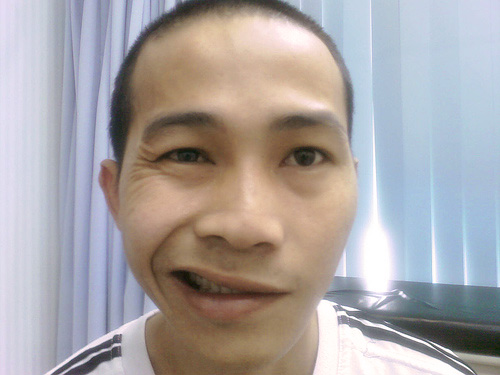
Patient had left sided facial nerve paralysis—a classic symptom of Bell’s Palsy
- Pain in or around ear
- Sensitivity to sound
- Headache
- Loss of taste
- Tingling around lips
- Face feels stiff
- Change in facial appearance
- Facial paralysis
- Difficulty closing eye
- Drooling
Help your recovery
When the facial nerve is paralyzed, considerable attention must be given to maintaining a healthy eye, which requires a constant flow of tears. These tears are spread out over the eye by blinking, but blinking is diminished or eliminated in facial nerve paralysis. Diminished blinking and the absence of tearing together can reduce or eliminate the flow of tears across the eyeball, resulting in drying, erosion, and ulcer formation on the cornea and possible loss of the eye.
Closing the eye with a finger is an effective way of keeping the eye moist. Use the back of the finger to ensure that the eye is not injured with the finger tip. Protective glasses or clear eye patches are often used to keep the eye moist, and to keep foreign materials from entering the eye.
If the eye is dry, you may be advised to use artificial tears to keep it moist. The drops should be used as directed by your doctor. You may have to put one or two drops in the affected eye every hour while you are awake, and place ointment in your eye at bedtime.
Effective treatment by Acupuncture & Traditional Chinese Medicine
Acupuncture treatment is to regulate Qi(energy) and blood circulation in order to remove obstruction and restore facial nerve function. While some cases of Bells Palsy will spontaneously resolve within a few weeks, this is likely due to the severity of the attack (e.g., the less severe, the easier and less time it takes for the body to fight off the disease). In most Bells palsy cases however, the patient has a deficient immune system that prevents them from effectively combating the illness and subsequently, the condition may linger on even return.
Since acupuncture can help to move the blood circulation and energy to the affected site to help restore function, and also has immune enhancing effects, it is a welcome addition to the treatment of peripheral facial paralysis that can increase the potential for a faster and complete recovery.
To prevent future recurrences of the disease, it is also necessary to eliminate any possible factors that can treat the immune system, and maintain a healthy lifestyle involving proper rest, moderate exercise, a balanced, nutritious diet (lots of fruits, vegetables, whole grains, nuts, legumes, fish, and reduced portions of red meat, poultry and dairy), and creative outlets for relieving stress. In my experience; patient should try traditional Chinese medicine through acupuncture, cupping, and herbal medicine that can significantly improve and help to resolve the condition.
Testimonials
I was having Bell’s Palsy for 8 days before I was recommended by friend to see Dr. Woo for treatment. On my first visit with Dr. Woo, my mouth was drooping without control. My left eye was unable to close. My left face was frozen & swollen. Dr. Woo used acupuncture, acupressure & Chinese herbs to help treated my symptom. After 8 visits with Dr. Woo, I am 100% cure. I am so pleased & definitely recommend Dr. Woo to all my friends.
AcupuncturistOlivia Wan-Mei Woo41-51 77th StreetElmhurst, NY 11373Tel: 718-458-6391Em: DrWoo@outlook.com |
ACCESSIBLE BY:E, F, R, M, 7 train lines(74 St, Roosevelt Ave Station)10 Minutes from Manhattan by trainPrivate Parking Available
|
